
As your wedding day gets closer, the to-do list starts to shift. You’re no longer choosing color palettes or booking vendors — instead, you’re double-checking timelines, final payments, and all of those “are we forgetting something?” details. One of the most common (and most confusing) questions that comes up at this stage is wedding vendor tipping.
If you’ve found yourself wondering who should receive a gratuity, how much to tip, or whether tipping is even expected — you are not alone. Unlike restaurants or salons, wedding etiquette doesn’t always come with clear, universal rules. Every vendor category is different, contracts vary, and expectations can change depending on the level of service provided.
A good general guideline is this: if you would typically tip for that service in everyday life, tipping at a wedding is usually considered standard. For most other wedding vendors, gratuity is completely optional and should be based on your experience, level of service, and personal budget.
It’s also important to remember that tipping is never required to receive great service. Wedding professionals take immense pride in their work and are committed to showing up fully for your day, regardless of gratuity. When couples do choose to tip, it’s simply viewed as an extra thank-you — a tangible way to acknowledge exceptional effort, long hours, and behind-the-scenes work that often goes unseen.
The guide below is based on what we typically see couples tip in our area. These are not rules or expectations — just realistic, experience-based suggestions to help you plan confidently and avoid any last-minute stress.
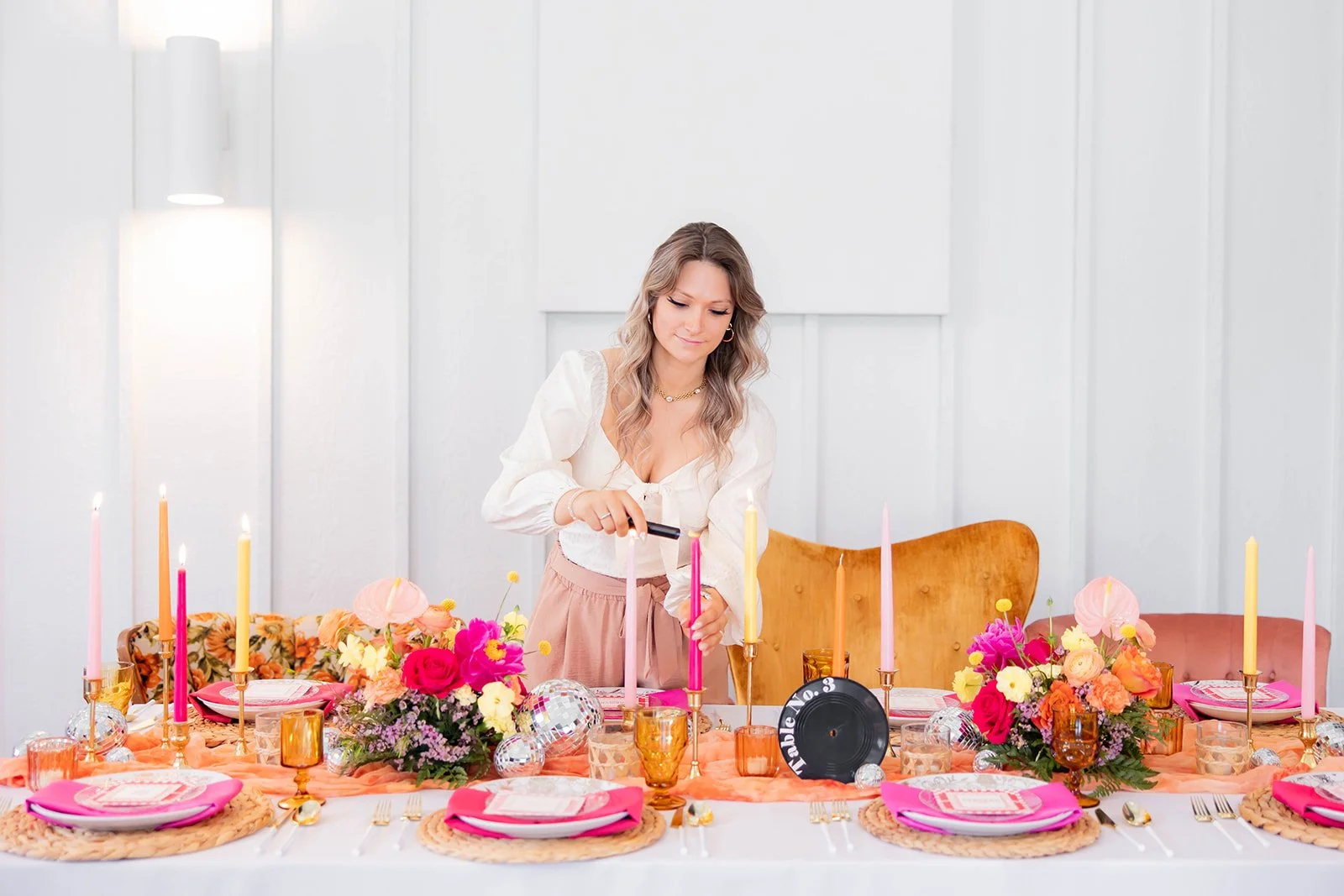
Photo By: Sailor Breeze
Is Tipping Wedding Vendors Necessary?
The short answer: no — tipping is not required.
Wedding vendors are professionals who set their pricing intentionally to reflect their expertise, time, and the services they provide. You should never feel obligated to tip simply because it’s a wedding. Exceptional service should be delivered regardless of gratuity, and your vendors are committed to showing up fully for your day whether you tip or not.
For some service-based roles — like hair and makeup artists, bartenders, and catering staff — tipping is more common and often expected, similar to everyday service settings. For many other vendors, including photographers, planners, florists, DJs, and designers, tipping is entirely optional and always at the couple’s discretion.
If you choose to tip, it should come from a place of appreciation, not pressure. Many couples decide to tip when a vendor goes above and beyond, solves unexpected challenges, provides emotional support, or delivers an experience that truly exceeds expectations. Others choose to show appreciation through heartfelt thank-you notes, glowing reviews, or referrals — all of which are incredibly meaningful to wedding professionals.
It’s also important to remember that tipping should never stretch your budget or add stress to your wedding day. If gratuity isn’t feasible or doesn’t feel right for you, that is completely okay. Gratitude can be expressed in many ways, and kindness, clear communication, and respect go a long way.
When in doubt, review your contracts, lean on your planner for guidance, and make the choice that feels right for you — not what you think you’re “supposed” to do.
If You Don’t Tip, a Thoughtful Review Goes a Long Way
If tipping doesn’t feel right for you — whether due to budget, contracts already including gratuity, or personal preference — please know that there are other incredibly meaningful ways to support your wedding vendors. One of the most impactful? Leaving a thoughtful review.
Online reviews play a huge role in a wedding professional’s business. They help future couples feel confident in their booking decisions, improve search visibility, and directly contribute to long-term business growth. For many vendors, especially small and locally owned businesses, a genuine review can be just as valuable — if not more — than a monetary tip.
When writing a review, be specific. Mention what stood out to you, how the vendor made you feel, and any moments where they went above and beyond. These details not only help future couples, but they also allow vendors to understand what they’re doing well and continue improving their services.
A handwritten thank-you note or a kind message sent after the wedding can be just as impactful. Vendors often save these notes and revisit them during busy seasons — they truly mean more than you may realize.
Whether you choose to tip, leave a review, write a note, or do all three, showing appreciation in any form is always felt and deeply valued.
Tipping by Vendor: What’s Typical in the Wedding Industry
Now that you have a general understanding of how tipping works at weddings, let’s break it down by vendor. Every wedding professional plays a different role on your day, which means tipping expectations can vary widely from one category to the next.
Some vendors provide hands-on, service-based support throughout the day, while others work behind the scenes long before guests arrive. Certain roles have industry standards where gratuity is common or expected, while others view tipping as an optional thank-you for exceptional service rather than a requirement.
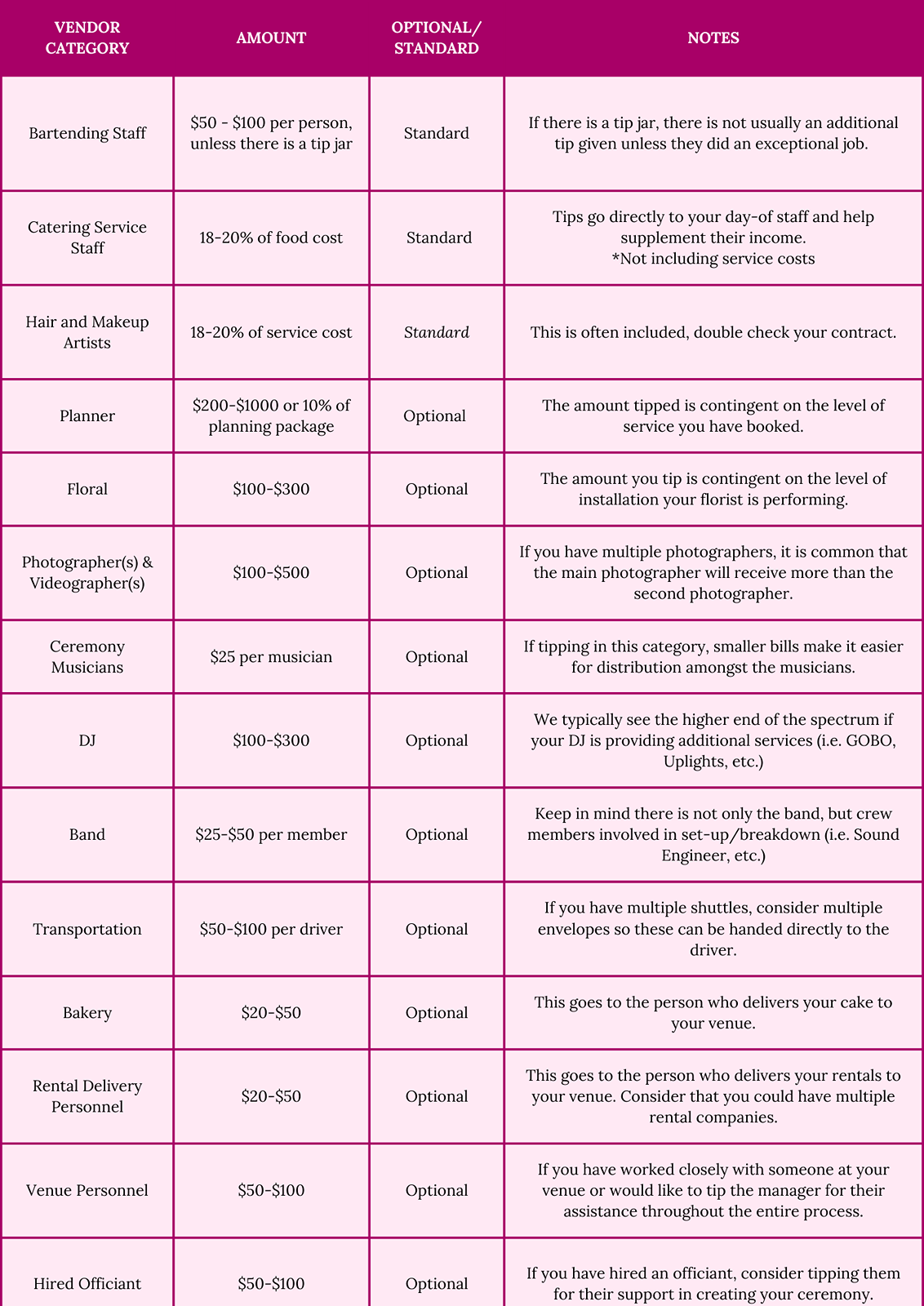
The guidelines below reflect what we most commonly see in the wedding industry and within our local market. They are not rules — just realistic benchmarks designed to help you plan confidently and avoid any awkward or last-minute uncertainty. Use them as a reference point, adjust based on your experience, and always defer to your contracts and personal comfort level.
Remember: tipping is meant to feel like appreciation, not obligation. Whether you choose to tip every vendor, a select few, or express your gratitude in other ways, the goal is simply to acknowledge the incredible work that goes into making your wedding day seamless and memorable.
Bartending Staff
Suggested Tip: $50–$100 per bartender
Bartenders play a major role in keeping guests happy and the reception running smoothly. From managing drink lines to handling special requests and maintaining professionalism in a fast-paced environment, their work is highly guest-facing and physically demanding. Tipping bartenders is considered standard in most service settings, including weddings. If there is a tip jar, guests often contribute directly and an additional tip from the couple is not typically expected unless service was exceptional. If no tip jar is provided, a $50–$100 tip per bartender is a thoughtful way to recognize their long hours and attentive service.
Catering Service Staff
Suggested Tip: 18–20% of food cost (not including service fees)
Catering teams do far more than serve food — they manage timing, presentation, guest needs, and often behind-the-scenes problem solving. A gratuity helps supplement the income of the staff working your event and acknowledges the physical demands of their role. While many contracts include a service charge, that fee does not always go directly to staff. When gratuity is not included, couples commonly tip 18–20% of the food cost as a way to thank the day-of catering team.
Hair & Makeup Artists
Suggested Tip: 18–20% of service cost
Hair and makeup artists are service-based professionals, similar to salon stylists, and tipping is typically expected unless gratuity is already included in the contract. They often arrive early, manage tight timelines, and help set a calm, positive tone for the wedding morning. A tip of 18–20% of the service cost acknowledges both their technical skill and their ability to adapt when schedules shift or last-minute changes arise.
Wedding Planner / Coordinator
Suggested Tip: $200–$1,000 or approximately 10% of your planning package
Tipping a planner or coordinator is optional, but many couples choose to do so when service exceeds expectations. This role often involves months (or years) of planning, vendor coordination, emotional support, and extensive day-of execution. When couples elect to tip, we typically see amounts ranging from $200–$1,000, or about 10% of the planning package, depending on the scope of services booked and the level of involvement provided.
Florist
Suggested Tip: $100–$300
Florists invest significant time in design, prep, transportation, and on-site installation — often during early morning or late-night hours. While tipping is optional, many couples choose to tip when there is extensive setup, large installations, or complex floral designs. A gratuity of $100–$300 is commonly given to recognize the artistry and physical labor involved in bringing your floral vision to life.
Photographer(s) & Videographer(s)
Suggested Tip: $100–$500
Photographers and videographers work long hours capturing moments that cannot be recreated. While tipping is optional, it’s a generous gesture when your media team goes above and beyond — whether that’s helping manage the timeline, capturing unexpected moments, or making you feel comfortable in front of the camera. When couples choose to tip, we typically see amounts ranging from $100–$500, with the lead photographer or videographer often receiving more than assistants or second shooters.
Ceremony Musicians
Suggested Tip: $25 per musician
Live ceremony musicians contribute greatly to the emotion and atmosphere of your wedding. Tipping is optional, but appreciated, especially when musicians assist with timing, transitions, or learning special songs. If you choose to tip, $25 per musician is common, and smaller bills make distribution easier among group members.
DJ
Suggested Tip: $100–$300
Your DJ plays a key role in guiding the flow of the reception, keeping guests engaged, and maintaining energy throughout the night. When DJs provide additional services such as uplighting, special effects, or extended coverage, couples often tip toward the higher end of the range. A gratuity of $100–$300 is a common way to say thank you for exceptional performance and professionalism.
Live Band
Suggested Tip: $25–$50 per band member
Bands typically include multiple performers and behind-the-scenes crew members handling sound, setup, and breakdown. While tipping is optional, it’s appreciated when a band delivers a standout performance or accommodates special requests. Couples often tip $25–$50 per band member, keeping in mind that crew members may also share in the gratuity.
Transportation (Shuttle, Limo, Bus Drivers)
Suggested Tip: $50–$100 per driver
Transportation drivers are responsible for keeping guests safe, on time, and comfortable — often late into the night or across multiple trips. Tipping is optional but appreciated, particularly for long routes or multiple shuttles. A gratuity of $50–$100 per driver is common, with separate envelopes prepared for each driver.
Bakery / Cake Delivery
Suggested Tip: $20–$50
Cake delivery requires careful handling, precise setup, and coordination with your venue team. While optional, tipping the delivery professional is a thoughtful way to acknowledge the care taken to ensure your cake arrives safely and looks perfect. We typically see tips in the $20–$50 range.
Rental Delivery Personnel
Suggested Tip: $20–$50 per delivery team
Rental crews handle heavy lifting, tight delivery windows, and detailed setup of items like tables, chairs, tents, and décor. Many weddings involve multiple rental companies, and tipping is a way to recognize the physical labor involved. Tips of $20–$50 per delivery team are common and typically go directly to the crew.
Security
Suggested Tip: $20–$50 per guard
Security staff help manage guest safety and maintain order throughout the event. While tipping is optional, it’s appreciated when guards are present for extended hours or assist with crowd control. Couples who tip often provide $20–$50 per guard, placed in individual envelopes.
Venue Personnel
Suggested Tip: $50–$100
If you worked closely with a venue coordinator or manager who provided ongoing support throughout the planning process and wedding day, a gratuity is a thoughtful gesture. When couples choose to tip venue personnel, we most often see amounts between $50–$100. Always check your contract, as some venues include gratuity.
Hired Officiant
Suggested Tip: $50–$100
Officiants often invest time in getting to know you, crafting a personalized ceremony, and guiding the emotional tone of the day. While optional, a gratuity of $50–$100 is commonly given to thank them for their preparation and presence on your wedding day.
Lighting Delivery & Installation
Suggested Tip: $20–$50
Lighting professionals work behind the scenes to install, adjust, and break down equipment that dramatically enhances the atmosphere of your venue. Tipping is optional, but a $20–$50 gratuity is a kind way to recognize their technical work and efficiency.
When & How to Prepare Tips Before the Wedding
If you plan to tip any of your vendors, the best way to reduce stress is to prepare everything before your wedding day. The week of your wedding is busy enough — gratuities should be one of those things you can simply check off your list.
We recommend pulling cash 1–2 weeks before the wedding and placing each tip into a separate, labeled envelope with the vendor’s name or role clearly written on the front. This avoids confusion and ensures tips go to the correct person.
Most couples assign tip distribution to their wedding planner, a trusted family member, or a member of the wedding party. If you have a planner, we’re happy to handle this for you so you don’t have to think about it on the day itself.
Keep all envelopes together in a secure location — such as a clearly labeled box or folder — and let the person responsible for distributing them know where they’re stored. Preparing tips ahead of time allows you to stay fully present and enjoy your wedding without any last-minute scrambling.
What to Do If Service Wasn’t What You Expected
It’s important to know that tipping is always optional, and it’s okay to adjust or forgo a gratuity if a vendor’s service didn’t meet expectations. Gratuity should be a reflection of your experience — not an obligation.
If something felt off or didn’t align with what was promised, consider whether the issue was within the vendor’s control or related to circumstances outside of it. In many cases, your wedding planner can help navigate concerns or address issues on your behalf, either during the event or afterward.
If you feel comfortable, constructive feedback can be incredibly valuable. Many vendors genuinely want to know where things fell short so they can improve. You’re never required to tip to avoid awkwardness, and withholding a tip due to poor service is completely acceptable.
Your wedding day should feel supported, professional, and stress-free — and gratuity should always reflect that experience.
Non-Monetary Ways to Thank Your Wedding Vendors
While gratuity is always appreciated, it’s not the only way to show gratitude — and for many vendors, non-monetary appreciation can be just as meaningful.
One of the most impactful things you can do is leave a thoughtful online review. Reviews help future couples feel confident in their decisions and directly support a vendor’s business growth. Mention specific moments, standout service, or how the vendor made you feel throughout the process.
Handwritten thank-you notes or personal messages are also deeply valued. Many wedding professionals save these notes and revisit them during long or busy seasons — your words truly matter.
Other meaningful ways to show appreciation include:
Tagging and crediting vendors on social media
Referring friends or family
Sharing photos or testimonials they can use for their portfolio
Whether you choose to tip, write a review, send a note, or do all three, every gesture of gratitude makes a difference and is always felt.
At the end of the day, wedding vendor tipping is about gratitude — not obligation. There is no single “right” way to do it, and what matters most is that your choices feel aligned with your experience, values, and budget.
Some couples choose to tip many vendors, others focus on a select few, and some express appreciation in non-monetary ways like reviews, referrals, or handwritten notes. All of those choices are valid. The goal is simply to acknowledge the incredible amount of care, time, and effort that goes into bringing your wedding day to life.
Planning ahead, understanding what’s customary, and leaning on your planner for guidance can remove so much unnecessary stress. When tipping is handled intentionally and in advance, it becomes one less thing to think about — allowing you to stay present, enjoy the moment, and celebrate everything you’ve worked so hard to plan.
If you have questions about tipping, contracts, or how to prepare gratuities for your wedding day, we’re always here to help. Supporting our couples with clarity and confidence is just as important to us as executing a seamless wedding day.