
Venue Coordinator vs Day-of Coordinator: What’s the Difference?
If you’ve started planning your wedding, you’ve probably heard the terms venue coordinator and day-of coordinator used interchangeably — and honestly, it’s confusing. Many couples assume they’re the same role, or that having one means they don’t need the other. Unfortunately, that misunderstanding often leads to stress, missed details, and a lot of last-minute questions on wedding day.
The truth is: venue coordinators and day-of coordinators serve very different purposes, even though they’re both there on your wedding day. One works for the venue. The other works for you.
In this post, I’m breaking down exactly what each role does, what they don’t do, and how to know which one you actually need for your wedding — so you can plan with clarity, realistic expectations, and way less stress.
Venue Coordinator vs Day-of Coordinator: Who Works for Who?
Understanding the difference between a venue coordinator and a day-of coordinator is essential when planning your wedding. Many couples assume these roles overlap, only to realize on wedding day that important tasks — vendor communication, timeline management, décor setup, problem-solving, and guest flow — aren’t actually covered by the venue.
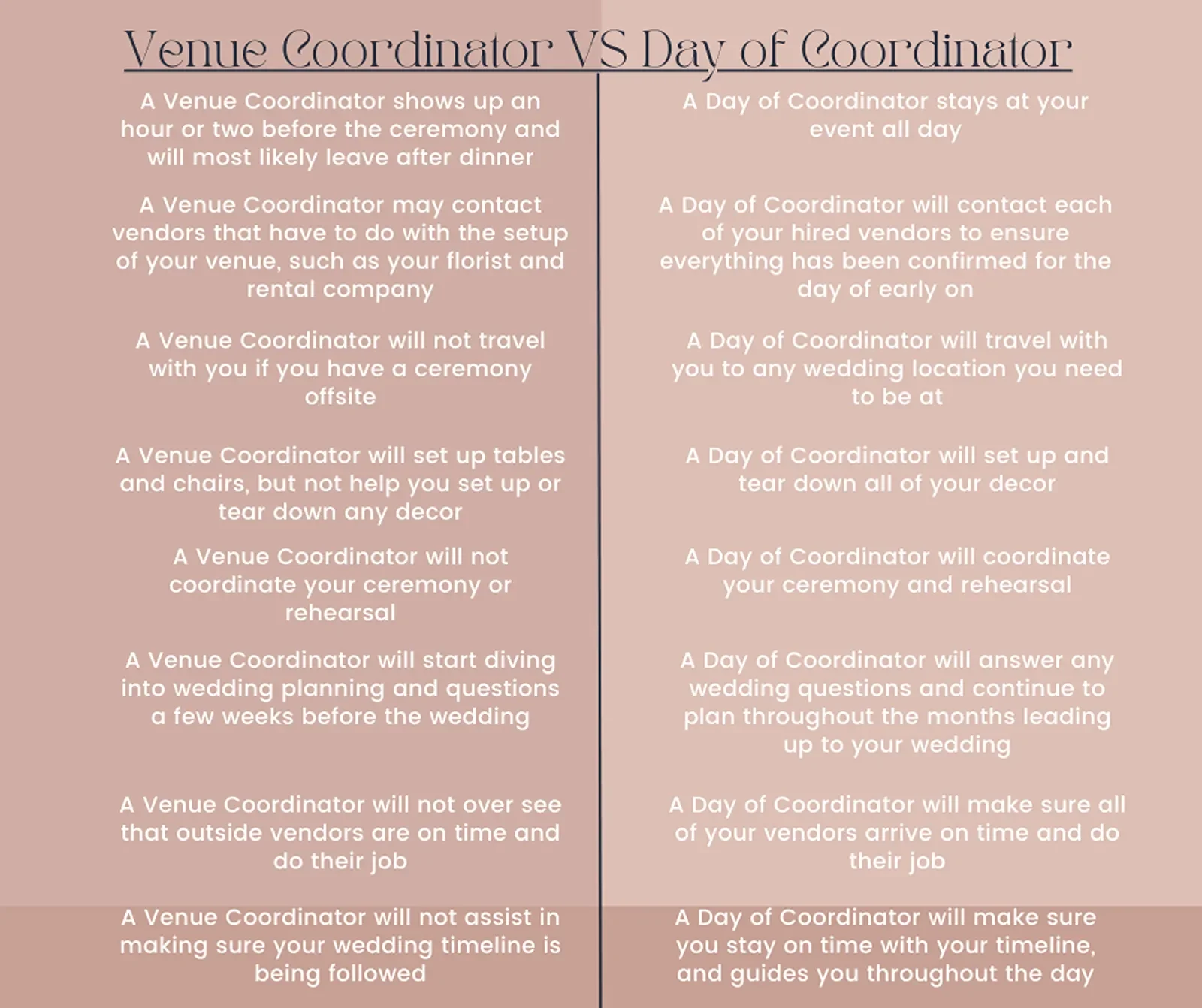
A venue coordinator is hired to protect the venue’s operations, policies, and timeline.
A day-of coordinator is hired to protect you — your vision, your vendors, your schedule, and your peace of mind.
Going into your wedding day expecting a venue coordinator to perform all the responsibilities of a day-of coordinator often leads to last-minute stress and unmet expectations. While the titles sound similar, the roles are very different, and confusing the two can create gaps in wedding day coverage.
The best way to avoid surprises is to ask your venue upfront what their assigned venue coordinator is responsible for on wedding day. They’ll clearly outline what they handle — and just as importantly, what they don’t — so you can decide whether hiring a day-of coordinator is the right choice for your wedding.
All About Having a Venue Coordinator
A venue coordinator is primarily responsible for managing the venue itself on your wedding day. They serve as the main point of contact between the couple and the venue staff, ensuring the venue’s spaces, policies, and operations run smoothly.
On wedding day, your venue coordinator typically oversees venue-specific logistics such as access to the space, ensuring the bar and catering services are set up correctly (if provided by the venue), and confirming the venue is ready for guests. They also monitor and enforce venue rules — for example, making sure décor teams don’t attach items to walls without approval, timelines align with venue access hours, and outside alcohol or unapproved vendors aren’t brought in.
While venue coordinators play an important role, it’s important to understand that their responsibilities are limited to the venue’s needs. They do not manage the full wedding timeline, coordinate vendors beyond the venue, or oversee personal details unless explicitly stated in your contract.
Because every venue operates differently, each venue coordinator’s role can vary. Some offer hands-on support, while others focus strictly on venue logistics. That’s why it’s essential to ask your venue coordinator exactly what services they do — and do not — provide before wedding day.
Questions to Ask Your Venue Coordinator
If you’re considering relying solely on your venue coordinator instead of hiring a day-of coordinator, these questions will help you understand what level of wedding day coordination is actually included — and what responsibilities may still fall on you.
Be sure to ask:
Will you be present on our wedding day, and for how long?
Will you create and distribute a detailed wedding day timeline?
Will you attend and run our rehearsal?
Will you assist with setup, such as tables, chairs, or décor?
How long will you remain on-site during the wedding?
Will you help coordinate transportation and arrival times?
Will you be in direct communication with all of our wedding vendors?
Will you direct vendors upon arrival and answer questions during setup?
The answers to these questions will quickly clarify whether your venue coordinator’s role aligns with your expectations — or if hiring a day-of coordinator would provide the additional support, vendor communication, and peace of mind you’re looking for.
All About Hiring Your Own Day-of Coordinator
Unlike venue coordinators, who work on behalf of the venue, a wedding day-of coordinator works exclusively for you — the couple. Their sole focus is protecting your timeline, your vision, and your experience so you can truly enjoy your wedding day without stress or distractions.
A professional day-of coordinator manages the moving parts of your wedding from start to finish. They attend and run your rehearsal, coordinate your ceremony processional, communicate directly with all of your vendors, and ensure everyone is working from a clear, organized timeline. On wedding day, they are the point person — answering questions, solving problems, and handling last-minute changes so you don’t have to.
Your day-of coordinator also takes care of the hands-on details many couples don’t realize fall on them without support. This often includes setting up all décor, managing ceremony and reception transitions, cueing important moments, overseeing vendor arrivals, and tearing everything down at the end of the night. Without a day-of coordinator, these responsibilities often fall to the couple, wedding party, or family members — pulling them away from the celebration.
Hiring your own wedding day-of coordinator allows you, your fiancé, and your loved ones to stay fully present on your wedding day. Instead of answering vendor questions, managing timelines, or handling logistics, you’re free to enjoy every moment — knowing a professional is handling the details behind the scenes.
What a Day-of Coordinator Typically Covers
A professional wedding day-of coordinator commonly handles:
Creating, managing, and distributing a detailed wedding day timeline
Attending and leading the wedding rehearsal
Coordinating the ceremony processional, cues, and timing
Serving as the main point of contact for all wedding vendors
Confirming vendor arrival times and setup requirements
Directing vendors to their designated setup locations
Managing ceremony and reception transitions
Setting up ceremony décor (aisle markers, signage, programs, reserved seating, etc.)
Setting up reception décor (centerpieces, place cards, welcome table, sweetheart table, cake table, favors, signage, etc.)
Tearing down and packing up all décor at the end of the night
Handling last-minute changes, delays, or weather adjustments
Troubleshooting issues discreetly so the couple never feels the stress
Coordinating grand entrances, first dances, toasts, cake cutting, and special moments
Keeping the couple on schedule without rushing important moments
Managing family and wedding party logistics
Answering guest questions and directing guests as needed
Coordinating transportation timing and arrivals
Ensuring personal items (cards, gifts, décor pieces) are secured at the end of the night
Communicating timeline updates to vendors throughout the day
Acting as a calm, professional buffer between the couple and any unexpected challenges
How to Decide If Your Venue Coordinator Is Enough
The term coordinator can be confusing — and you’re not alone if you’re unsure what level of support your venue coordinator actually provides. Because the word sounds similar to day-of coordinator, many couples assume the roles overlap. In reality, they serve very different purposes.
A venue coordinator is provided by the venue and works on behalf of the venue, not the couple. Their primary responsibility is to ensure the venue runs smoothly, venue policies are followed, and the space is properly managed throughout the day. The easiest way to remember their role is to focus on the word “venue” in their title — their priority is the venue itself.
While a venue coordinator may assist with minor logistical questions or help point vendors in the right direction, their services are typically limited. They are not responsible for full wedding day coordination, vendor communication across your entire vendor team, décor setup and teardown, or managing the emotional and logistical flow of your wedding day the way a day-of coordinator does.
Understanding this distinction is essential so you don’t head into your wedding day with expectations that aren’t covered by your venue’s services.
If you’re trying to determine whether your venue coordinator is enough or if you should hire your own wedding day-of coordinator, ask yourself the following:
Do you need help running your ceremony rehearsal and coordinating your ceremony?
Do you want assistance communicating with vendors leading up to the wedding?
Do you want your vendors to have a single point of contact so they’re not reaching out to you on or before wedding day?
Do you need help creating and managing a detailed wedding day timeline?
Do you want guidance pulling together your design vision and décor plan?
Do you need hands-on help setting up and tearing down décor?
Do you want someone dedicated to problem-solving and timeline adjustments on wedding day so you don’t have to?
If you answered yes to any of these questions, hiring a day-of coordinator is likely the right choice for you.
While services vary by professional, most wedding day-of coordinators cover all of the responsibilities listed above — and often more. A day-of coordinator works closely with you to understand your vision, manage the details, and ensure your wedding day runs smoothly so you can stay present, relaxed, and fully enjoy the celebration you planned.
Can I Have a Venue Coordinator and a Day-of Coordinator?
Absolutely! In fact, having both a venue coordinator and a wedding day-of coordinator often creates the smoothest, most stress-free wedding day experience.
When these two roles work together, each professional is able to focus fully on what they do best. For example, while your venue coordinator is overseeing venue logistics — such as room access, table and chair placement, and venue setup — your day-of coordinator can focus on personal details like placing centerpieces, styling décor, coordinating vendors, and managing the wedding day timeline.
This collaboration allows every detail to be handled efficiently without overlap or confusion. With both professionals in place, no one is stretched too thin, and nothing falls through the cracks — which is exactly what keeps your wedding day running smoothly.
If your venue does not provide a venue coordinator, there’s no need to worry. A professional day-of coordinator or wedding planner is fully equipped to handle venue-related logistics in addition to coordinating your vendors, décor, and timeline. In fact, most wedding day-of coordinators are accustomed to stepping in, problem-solving, and going above and beyond to ensure everything is executed seamlessly — even when a venue coordinator isn’t present.